
A ribeye can have a dark crust and still be cold in the middle. A thinner one can turn gray throughout while you're waiting for that same crust. If you're learning how to cook ribeye steak, thickness matters more than the steak's weight. A hot pan suits a thinner cut; a thick ribeye benefits from gentler heat before or after browning. Your thermometer decides when it's ready—not the clock.
How to cook ribeye steak: choose by thickness
Say you're cooking two ribeyes in an Avondale kitchen: one is ¾ inch thick, and the other is 2 inches thick. Giving them identical treatment won't produce identical results. Heat has farther to travel through the thicker steak, so its surface can scorch before its center warms.
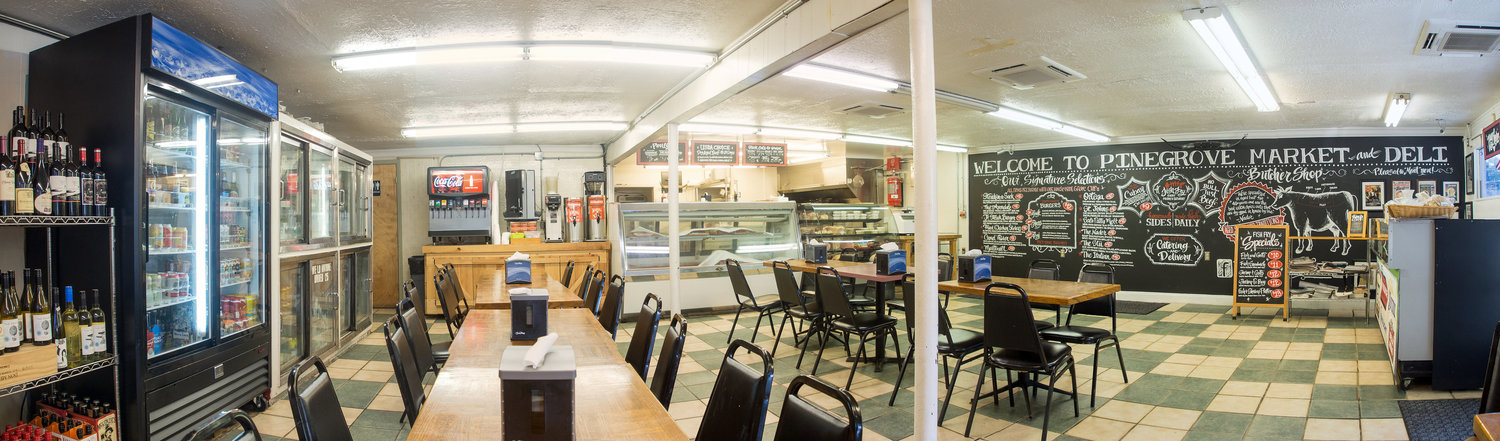
Pinegrove Market is a family-owned deli and butcher shop in Avondale, Jacksonville, with dry-aged ribeye among its butcher shop steaks. Choosing the cut is also choosing how you'll cook dinner.
If you're deciding how to cook a ribeye, these are useful starting points rather than hard boundaries:
- Under 1 inch: A hot skillet or direct grill heat works well. The center heats quickly, so temperature checks start early.
- About 1–1½ inches: Cast iron gives you close control. On a grill, a cooler zone lets you finish without burning the surface.
- About 1½–2 inches or thicker: Reverse sear is my preference. Gentle cooking warms the center before a brief, hot finish builds the crust.
Bone-in steaks can heat unevenly. Thickness still guides the method, but more than one thermometer reading helps you catch a cooler spot.
A dry surface makes browning easier
A steak straight from its wrapper may leave a puddle in the skillet. That moisture has to evaporate before the surface can brown well; meanwhile, the center keeps cooking. You don't need a long counter-top warm-up to solve this.
Paper towels remove surface moisture. Salt can go on immediately before cooking, or several hours ahead while the steak sits uncovered on a rack in the refrigerator. If advance salting leaves the surface damp, another blot before cooking helps.
A thin coating of neutral, high-heat cooking oil improves contact with the pan. Butter works better near the end, at reduced heat, because its milk solids burn during a hard sear. Pepper can go on then, too, if you dislike its scorched flavor.
Cast iron gives a weeknight ribeye a strong crust
Say you're cooking a 1¼-inch ribeye while potatoes finish in the oven. A skillet that's barely warm will cook the steak without much browning. A pan that's smoking heavily can burn the outside before dinner is ready.
A preheated cast-iron skillet over medium-high heat is a good starting point. The oil should shimmer, with ventilation running. Once the steak is in, an initial 1–2 minutes on each broad side usually gives browning a start. Those minutes aren't a doneness test.
After that first sear, you can flip about every minute and reduce the heat if the crust darkens too quickly. Repeated turning limits how long either face sits against the hottest surface. A brief turn onto the fatty edge helps brown it; tongs keep your hand away from splattering fat.
Temperature checks begin after the first few minutes. If the crust is ready but the center isn't, lower heat gives the inside time to catch up. An oven-safe skillet can also finish in a 300°F oven, with frequent checks near your target.
On the grill, leave room away from the flames
A ribeye's dripping fat can ignite beneath it. Say a flare-up appears under the steak while you're grilling in Jacksonville on a humid evening. Leaving it there produces soot and a bitter crust, not better browning.
A two-zone grill gives you an escape route. Gas burners can heat one side while the other stays off; charcoal can sit mainly beneath one side of the grate. The hotter zone browns the steak, and the cooler zone finishes the center with the lid closed.
For a steak around 1 inch thick, roughly 1–2 minutes per side over direct heat is an initial checkpoint. Your grill may need less or more. A thicker steak often needs indirect heat after browning. Moving it away from a flare-up protects the crust, while temperature checks prevent that slower finish from going too far.
Reverse sear gives thick ribeyes more control
A 2-inch ribeye can develop a thick gray band under its crust when it spends the whole cook over fierce heat. Reverse sear changes the order: the center warms gently first, then the surface gets its hot finish.
A rack over a rimmed baking sheet allows air to reach both sides in a 250°F oven. For a finish that follows USDA's minimum, about 125–130°F is a useful intermediate center temperature before searing. It isn't the serving temperature or a safety endpoint.
A thick steak may take roughly 30–60 minutes in that oven, depending on its starting temperature and shape. Checking around 20 minutes catches faster progress; a leave-in probe makes the slow stage easier to follow.
The final sear happens in a hot skillet or over direct grill heat. About 45–90 seconds per side can start the crust, followed by temperature checks. If the center hasn't reached 145°F, gentler heat can finish it without scorching. Reverse sear takes longer overall, but the slower temperature rise gives you more room to react.
What ribeye internal temperature should you use?
“Medium” can mean different things to different cooks. For example, a steak at 140°F may fit a culinary medium range, but it hasn't reached USDA's recommended minimum. Doneness labels and safety guidance answer different questions.
The USDA Food Safety and Inspection Service's temperature chart (2025) specifies 145°F before removal from heat, followed by at least a 3-minute rest, for whole-cut beef steaks.
Wikipedia's article on doneness (2026) gives these culinary ranges and notes that definitions vary:
- Rare: 125–130°F.
- Medium rare: 130–140°F.
- Medium: 140–150°F.
- Medium well: 150–155°F.
- Well done: 160°F or higher.
Temperatures below 145°F don't meet that USDA recommendation. These ranges describe preferences; they aren't alternative safety instructions.
For a useful reading, the thermometer enters from the side into the thickest part of the meat, away from bone and large fat pockets. Checking another spot helps confirm the cooler center. Color alone can't verify safety.
Resting steak means watching carryover cooking
A steak can leave the pan at your target and rise higher while you set the table. That continued temperature rise is carryover cooking: heat moves from the hotter outer layers into the cooler center after active cooking stops.
Wikipedia's doneness article (2026) describes a typical rise of 5–9°F, with larger rises possible and less rise after low-temperature cooking. That isn't a guaranteed allowance for your ribeye. A hard-seared thick steak and a gently heated one won't behave alike.
For this guide's safety target, the steak reaches 145°F on the heat; an assumed rise during resting doesn't replace that reading. A 5–10-minute rest is a practical serving window for many ribeyes, and always includes USDA's minimum 3 minutes. Loose foil retains some warmth; a tight wrap traps steam and softens the crust. You can check the temperature again to learn how your usual cut behaves.
Dry-aged ribeye needs earlier temperature checks
Say your usual skillet timing works for a fresh ribeye, but tonight's steak is dry-aged. Copying that timing can overshoot the center temperature. Aging changes the meat, so the thermometer deserves more attention.
Dashdorj and colleagues' peer-reviewed review (2016) reports aging shrinkage of 6–15% and describes shorter cooking times for dry-aged beef than wet-aged beef. That shrinkage is separate from trimming loss, and the review doesn't supply a universal percentage reduction in cooking time.
So you can use the same thickness-based method while checking sooner. A dry surface may also brown readily; reducing heat once the crust is ready protects it. Dry aging doesn't change USDA's safe minimum.
Pinegrove's dry-aging notes describe wrapping each loin in cotton towels that are changed daily during the initial 10-day to 2-week period before steaks are hand-cut and trimmed. Our guide to dry-aged beef explains the process further. You don't need a heavy marinade to cover the flavor; salt and a little finishing butter leave it room.
Match the method to the steak you bring home
If dinner is an hour away, a 2-inch ribeye asks for a different plan than a thin steak. Knowing how to cook ribeye steak starts with that decision at the counter. A thicker cut suits reverse sear; a thinner one gets you to dinner faster in a skillet.
For questions about Pinegrove's dry-aged ribeye, you can call (904) 389-8655 or find the Avondale shop's location and hours. The useful detail to settle first is thickness. Your thermometer handles the finish.