
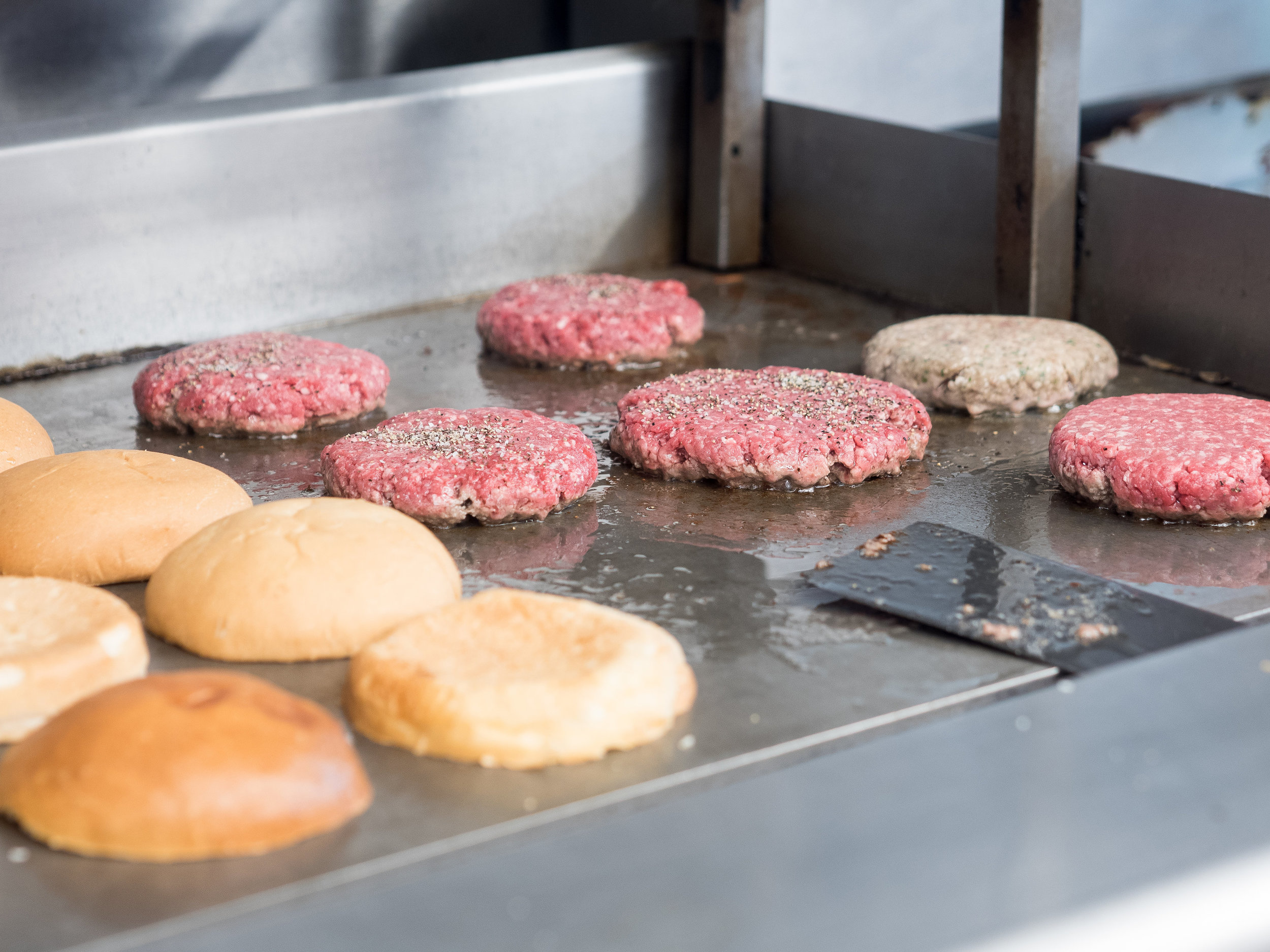
If you're wondering how much meat per person to buy, a useful starting point is 6 ounces of cooked, edible meat per adult when meat anchors the meal. With a 75% yield, that's 8 ounces of raw boneless meat. Younger children might need half that portion. But bones, trimming and cooking losses can change your shopping weight considerably. A pound of turkey isn't a pound of steak.
Your menu matters more than head count
Say you're feeding a family dinner with steak and potatoes, then hosting a lunch with sandwiches and bean salad. The same guest count won't necessarily need the same meat order, because meat plays a different role in each meal.
Pinegrove Market is a family-owned deli and butcher shop in Avondale, Jacksonville. Its butcher shop's dry-aged steaks and deli offerings make that distinction useful: a steak-centered dinner needs a different portion plan from a mixed lunch spread.
For shopping estimates, 6 ounces cooked per adult works as a middle starting point for a meat-centered dinner. A hungry group with light sides may need 8 ounces. If meat is one of several substantial proteins, 4 ounces cooked per adult may be enough because beans, eggs or another protein also fill the plate.
For younger children eating smaller meals, 3 ounces cooked at a meat-centered dinner, or 2 ounces in a mixed spread, is a workable estimate. Teenagers and children with adult appetites belong in the adult count. These are hosting estimates, not nutrition requirements; you know your guests better than a fixed chart does.
How much meat per person: the calculator
An order for twelve adults can look generous on the scale and still leave you short after cooking. The calculator works backward from what you'll actually serve, rather than treating the package weight as edible portions.
Cooked ounces needed = adults × adult portion + children × child portion.
Raw pounds to buy = cooked ounces needed ÷ 16 ÷ yield.
Yield means the share of purchased weight that becomes cooked, edible meat. A 75% yield goes into the formula as 0.75. One pound contains 16 ounces.
If you're calculating how much meat per person for a party with several meats, the cooked portion is the total across those meats, not a full portion of each. You can divide that total by expected preference, then calculate each meat's purchase weight with its own yield. Otherwise, adding chicken to a beef menu can accidentally double the order.
Raw vs cooked weight: use a cut-specific yield
An eight-ounce raw steak doesn't stay eight ounces after cooking. Water and some fat leave the meat, and any discarded fat or gristle reduces the amount you eat. That's why a single shrinkage percentage won't fit every cut.
The USDA Food Buying Guide's meat yield table (accessed 2026) lists these purchased-to-edible yields:
- Ground beef with no more than 15% fat: 1 pound purchased yields 0.75 pound cooked, drained lean meat.
- Boneless tenderloin steak, side muscle on, defatted with a quarter-inch trim: 1 pound yields 0.75 pound cooked lean meat.
- Boneless chuck roast, practically free of fat: 1 pound yields 0.63 pound cooked lean meat.
- Bone-in chuck roast, practically free of fat: 1 pound yields 0.54 pound cooked lean meat.
The guide supports institutional purchasing; its yields help estimate quantities, but they aren't promises for your grill. Your cut, trimming and cooking method affect the result. A matching cut description is more useful than assuming all boneless meat yields 75%.
Bone-in vs boneless yield changes the order
A bone-in chuck roast and a boneless chuck roast can weigh the same in your cart but provide different amounts at dinner. The bone adds purchase weight without adding a serving.
Using the USDA chuck figures above, a 6-ounce cooked portion needs 6 ÷ 0.63 = about 9.52 ounces raw boneless, versus 6 ÷ 0.54 = about 11.11 ounces raw bone-in. Those are chuck-roast estimates, not rules for ribs or pork chops.
These yields already account for the difference between purchased weight and cooked edible meat. There's no separate bone deduction afterward; doing that would count the loss twice. For an unfamiliar bone-in cut, your butcher's estimate for that specific cut is a better starting point than an automatic “double it” rule.
How much steak per person makes a satisfying dinner?
Say your guests expect individual steaks, with baked potatoes and green beans beside them. A small steak can suit one guest while another expects a larger cut, so a shared roast calculation doesn't settle the whole question.
For a trimmed boneless steak, 8–12 ounces raw per adult is a practical shopping range, with the lower end for moderate appetites and substantial sides. At an assumed 75% yield, 8 × 0.75 = 6 ounces cooked, while 12 × 0.75 = 9 ounces cooked. The USDA tenderloin figure supports that assumption for its listed cut; a fatty ribeye may leave more discarded trim.
A larger steak costs more and leaves less room for sides. Your guest list should decide the size. The ribeye cooking guide can help with preparation once you've chosen portions.
Backyard cookout example: 20 adults and 6 children
Say you're grilling burgers in an Avondale backyard for 20 adults and 6 younger children, with buns, potato salad and corn. Burgers are the main protein, and you're using ground beef with no more than 15% fat.
The 75% USDA yield makes the working straightforward:
- Adults: 20 × 6 ounces cooked = 120 ounces.
- Children: 6 × 3 ounces cooked = 18 ounces.
- Total cooked meat: 120 + 18 = 138 ounces; 138 ÷ 16 = 8.625 pounds.
- Raw beef: 8.625 ÷ 0.75 = 11.5 pounds.
That order divides into twenty 8-ounce raw patties and six 4-ounce raw patties: 20 × 8 + 6 × 4 = 184 ounces; 184 ÷ 16 = 11.5 pounds.
For modest seconds, a 10% allowance gives 11.5 × 1.10 = 12.65 pounds. Rounding up to 13 pounds leaves 13 − 11.5 = 1.5 pounds, enough for 1.5 × 16 ÷ 8 = 3 extra adult patties. You aren't guessing at an extra bag of meat; you're buying known spare servings. A fattier mix needs its own yield estimate; the ground beef guide for burgers covers choosing the meat.
Holiday dinner example: turkey for 12 adults and 4 children
Say your holiday table has 12 adults and 4 younger children, with turkey as the sole meat alongside stuffing and vegetables. You're buying a whole bird with neck and giblets, but serving carved meat without skin.
The USDA Food Buying Guide, accessed in 2026, gives that purchase description a 0.42-pound yield of cooked turkey per pound purchased, excluding skin, giblets and neck meat.
Dinner needs 12 × 6 + 4 × 3 = 84 ounces cooked. That's 84 ÷ 16 = 5.25 pounds cooked, so the purchase calculation is 5.25 ÷ 0.42 = 12.5 pounds raw turkey.
Now suppose you also want four 4-ounce portions for lunch tomorrow. Those leftovers add 4 × 4 = 16 ounces, making 84 + 16 = 100 ounces cooked. The new order is 100 ÷ 16 ÷ 0.42 = about 14.88 pounds, rounded up to a 15-pound bird. Checking backward: 15 × 0.42 × 16 = 100.8 ounces cooked, just above the target.
The USDA FSIS turkey-roasting guide (2023) recommends allowing 1 pound of whole turkey per person. Here, 16 × 1 = 16 pounds is a comfortable alternative with more margin. The calculated 15-pound bird assumes the stated appetites and yield; it doesn't guarantee leftovers for everyone.
Spare portions need safe storage
Extra burgers won't help tomorrow's lunch if they've sat beside the grill all afternoon. In Jacksonville heat, the serving plan matters as much as the shopping plan.
USDA FSIS's Grilling Food Safely (2022) sets minimum internal temperatures of 160°F for ground beef, 165°F for poultry, and 145°F for beef steaks and roasts with at least a 3-minute rest. A thermometer checks safety; color doesn't.
Its guidance calls for discarding perishable food left out more than 2 hours, or 1 hour above 90°F. Prompt refrigeration in shallow containers helps extra portions cool. The FSIS turkey guide recommends using refrigerated turkey within 3–4 days, so planned leftovers need room in your fridge before guests arrive.
A useful order names the cut and the portions
“Meat for twenty” leaves unanswered questions, especially if some guests want steak and others will eat sandwiches. Your order becomes clearer when it names the cut, adult and child counts, and whether you want seconds or next-day meals.
That's the most reliable way to decide how much meat per person fits your gathering: cooked portions first, purchase weight second. If you're comparing a cookout with a catering tray spread, those details help explain the difference in quantities. Pinegrove Market takes orders by phone at (904) 389-8655; a specific head count and menu give that conversation a useful starting point.